


Ants
Seeing winged insects inside your home can feel like an emergency. Many homeowners look at a swarm near a window and assume it must be termites. That reaction is understandable, because termites are linked with expensive damage and hidden activity.
But here is the truth. Not every winged insect is a termite. In many cases, homeowners are seeing flying ants. Both can show up in large numbers. Both can be attracted to lights. Both can appear suddenly after changes in weather.
This guide is built to remove confusion. You will learn how to identify termites using fast visual checks, what termite swarmers mean, what flying ants usually mean, and which signs in the home matter most.
Progressive Pest Control uses this same identification logic when helping homeowners confirm what they are seeing. The goal is clarity first, then the right next step.
Why flying ants and termites get confused so often
Flying ants and termite swarmers are both winged reproductive insects. They are built for one mission, leaving the nest to start new colonies.
That shared behavior causes the confusion. They may appear in spring or after rain. They may gather around doors, porch lights, and window sills. They may show up in the thousands within minutes.
US EPA consistently warn that ants are often mistaken for termites, especially during swarming season.
What changes is what the swarm suggests.
Termite swarmers can signal a mature colony nearby, because swarming is a reproduction stage that typically occurs when a colony is established.
Flying ants can still be a nuisance or even indicate an indoor nest, but they are far less likely to mean structural wood damage.
The three fastest visual checks to identify them correctly
If you only remember one section, make it this one. You can identify termites vs flying ants by checking three features: antennae, waist, and wings. Multiple extension resources teach the same three feature method because it works in real homes.
Check 1: Antennae shape
Flying ants have elbowed antennae. The antennae bend, often at a noticeable angle.
Termite swarmers have straight antennae that can look like beads. If you can clearly see a bend, it is more likely an ant.
Check 2: Waist shape
Flying ants have a narrow pinched waist. You can often see a thin connection between the front section and the abdomen.
Termites have a broad waist. Their body looks more uniform from head to abdomen. If the insect looks like it has a wasp like waist, it points toward ants.
Check 3: Wing size and proportion
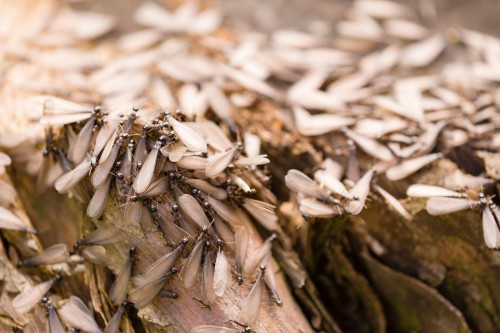
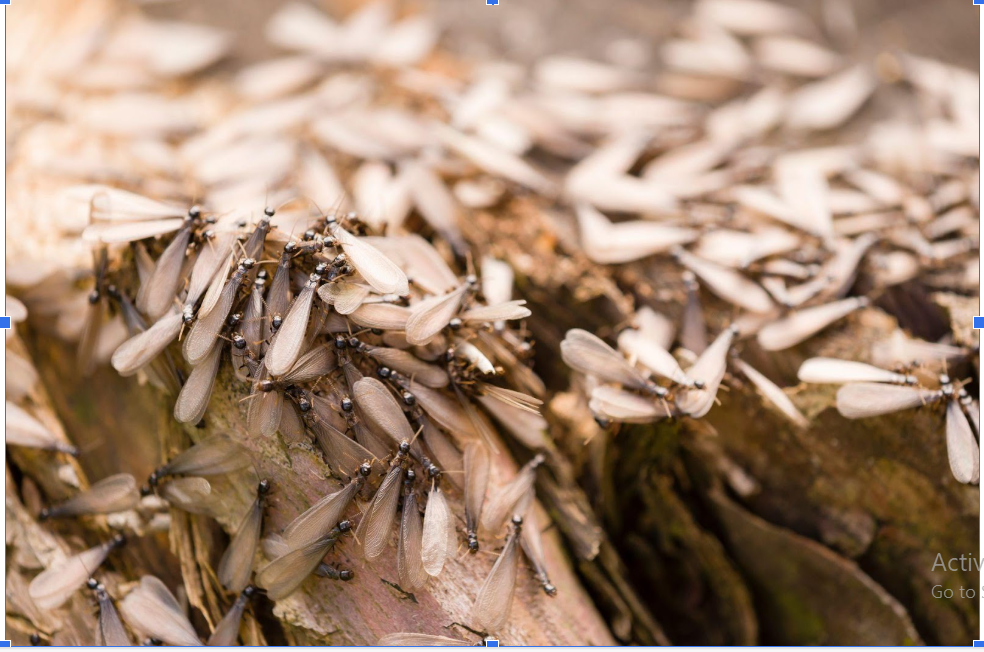
Flying ants usually have front wings that are larger than their back wings. Termite swarmers have two pairs of wings that are similar in length and size.
This wing difference is one of the easiest things to spot even without magnification.
 A quick summary homeowners can use
This table helps when you want a fast decision. It is also useful if you are trying to identify termites flying ants based on a photo or a few specimens.
Feature | Termite swarmers | Flying ants |
|---|---|---|
Antennae | Straight and beaded looking | Elbowed and bent |
Waist | Broad and thick | Narrow and pinched |
Wings | Both pairs similar in size | Front wings larger than back wings |
Body look | More uniform shape | More segmented look |
Common indoor clue | Shed wings near windows or lights | Swarm near light, wings may stay on briefly |
These traits are consistent across government and university sources.
What termite swarmers actually mean
Termite swarmers, also called alates, are reproductive termites. Their job is to leave the colony, pair up, and attempt to form a new colony.
Seeing swarmers can be a warning sign, but it is not a guarantee that your home is currently infested. UC IPM notes that observing swarms of flying termites does not always mean your structure is infested and that a professional inspection is usually required to confirm.
That said, swarmers inside a home matter more than swarmers outside. Indoor swarms can mean that swarmers originated from within wall voids, crawl spaces, or an attached structure.
It can also mean swarmers entered through gaps and collected indoors because of light and airflow. Both scenarios justify inspection.
What flying ants usually mean
Flying ants are the reproductive form of ants. They also swarm as part of mating flights.
Ant swarmers have bent antennae, pinched waists, and wing pairs that differ in size.
A flying ant swarm can come from outdoors. It can also come from a nest inside, especially if the home has moisture, food sources, or hidden voids that support ants.
Flying ants should not be ignored, but the risk profile is different from termites.
The most important indoor clue is shed wings
Homeowners often miss the clue that matters most because it looks like harmless debris.
If you find piles of clear wings on window sills, near doors, or under lights, take a closer look. Termite swarmers commonly shed their wings after landing. This is repeatedly listed as a key sign in extension and pest education resources.
Wing piles inside the home are one of the strongest reasons to schedule a professional check, especially when paired with other signs.
If you want a broader checklist of subtle damage patterns and early warning signs, our guide on spotting termites early walks through what homeowners often miss.
Signs of termites that go beyond a swarm
Many termite problems are hidden. The insects avoid light and stay inside wood or soil connected pathways.
That is why learning how to identify termites is not just about the insect. It is also about recognizing evidence in the structure.
Some guidance highlights consumer level identification and prevention. It notes that ant swarms are sometimes mistaken for termites and provides the key differences, including wing length and antennae shape.
Below are the most reliable signs homeowners can look for.
Mud tubes on foundations or crawl space walls
Subterranean termites use mud tubes, also called shelter tubes, to travel between soil and wood while protecting themselves from dry air. These tubes can appear on foundation walls, piers, and sill areas.
Structural pest guidance documents describe mud tubes as a common sign of subterranean termite infestation.
If you see a tube, do not immediately remove it. Photograph it first. A professional can help determine whether it is active.
Hollow sounding wood
Termites eat wood from the inside out. The outside can look normal while the inside is damaged.
A hollow sound when tapping trim, baseboards, or framing can be a clue, especially if combined with other signs.
Blistered paint or rippled drywall
Termite activity can mimic moisture damage. Surface bubbling, peeling, or subtle ripples near baseboards can occur when termites tunnel close to the surface.
This symptom is noted in wood destroying pest references as a potential indicator.
Frass and pellet like droppings
Drywood termites often produce frass, which looks like small pellets or gritty dust.
Not all termite species produce visible frass in the same way. Subterranean termites are more associated with mud tubes. Drywood termites are more associated with frass and kick out holes.
If you see pellets near wood elements, it is worth documenting.
Tight doors and sticking windows
This can happen for many reasons, including humidity. But when combined with other signs, swelling or distortion around frames can support the need for inspection.
A homeowner decision flow you can follow today
This flow keeps the process simple. It also prevents common mistakes like treating the symptom instead of confirming the source.
Step 1: Confirm what you actually saw
If you saw winged insects, proceed to the next step.
If you only found wings, treat it as a clue. Wing piles can still be meaningful.
Step 2: Use the three feature test
Check wings first, then antennae, then waist.
Equal length wings plus straight antennae plus thick waist strongly points to termites.
Front wings larger plus elbowed antennae plus pinched waist strongly points to ants.
Step 3: Check where the insects appeared
Termite swarmers are often noticed near bathrooms, kitchens, windows, and lights because of humidity and light attraction. UC IPM notes sudden appearance of flying insects in bathrooms or kitchens as a scenario homeowners may encounter due to the hidden lifestyle of subterranean termites.
If the swarm was isolated to one window and you also see many insects outside, it may be an outdoor swarm that drifted indoors.
If the swarm started from a wall void, vent, or floor gap, it deserves more attention.
Step 4: Look for supporting signs
Use the checklist image above. Check foundation edges, crawl spaces, sill plates, and areas where wood meets soil.
Some sources of wood destroying pest materials emphasize logical inspection locations like crawl space walls, sill plates, floor joists, and places where slabs join structures.
Step 5: Decide whether to schedule an inspection
If you have one clue only, such as a small swarm outside, you may monitor.
If you have two or more clues, such as shed wings plus a suspicious tube, schedule a professional inspection.
Contacting a licensed professional because signs often occur in dark or hazardous locations.
What time of year do swarmers usually show up
Swarming often occurs when conditions are warm and humid. It can follow rain, rising temperatures, or changes in barometric pressure.
Clemson extension materials explain that subterranean termites commonly swarm and that swarmers are often the most visible stage. You may also see ant swarmers during warm periods.
This is why identification matters more than timing alone.
Termite types that change what you might see
Homeowners do not need to identify termite species to take the right next step, but understanding type differences helps interpret signs.
Subterranean termites
These are among the most common structural termites in many areas. They live in soil and use shelter tubes.
Their presence often links to mud tubes, moisture, and soil contact points.
Drywood termites
Drywood termites live inside wood. They may not require soil contact.
They are often harder to detect. Educational materials note that drywood termites are secretive and difficult to detect except during swarming or repairs.
Signs can include frass pellets and small kick out holes.
Formosan subterranean termites
Some regions have more aggressive invasive species such as Formosan subterranean termites. Clemson provides separate educational material on this topic, which underscores that termite types can vary by region.
A professional inspection can identify species and tailor treatment.
Common mistakes homeowners make when identifying termites
Mistakes usually come from fear and speed. A swarm feels urgent, so people act fast without confirming what the insect is.
Mistake 1: Assuming any swarmer means your home is infested
UC IPM explicitly warns that swarms do not always mean the building is infested and recommends inspection to confirm.
A swarm is a signal, not a diagnosis.
Mistake 2: Focusing only on the insect, not the evidence
The insect tells you what it might be. The home evidence tells you what is happening.
Mud tubes, shed wings, hollow wood, and blistered surfaces are the evidence that changes risk.
Mistake 3 Spraying visible insects and thinking the problem is solved
Many consumer sprays kill what you can see. They do not address a colony hidden in soil, wood, or wall voids.
Some other guides notes that consumers should focus on effective prevention and appropriate treatment approaches.
Mistake 4: Ignoring moisture and wood contact conditions
Moisture is one of the most common underlying factors in wood destroying pest risk.
If the home has leaks, poor drainage, or wood touching soil, those conditions should be corrected regardless of whether the insect is an ant or a termite.
Prevention that reduces termite risk over time
Prevention is not a single product. It is a set of habits and structural checks that reduce attraction and access.
Here are practical prevention moves homeowners can use:
- Keep wood and soil separated: Maintain clearance between soil and siding or wooden parts.
- Fix leaks and manage moisture: Repair plumbing leaks. Improve ventilation in crawl spaces.
- Direct water away from the home: Keep gutters clean. Ensure downspouts move water away from the foundation.
- Store wood correctly: Keep firewood away from the home and off the ground.
- Seal visible entry gaps: Seal cracks around utility lines and openings when possible.
- Schedule periodic inspections: Regular inspections every few years help detect infestations before they become damaging.
Call Progressive Pest Control at (770) 791-0055 for a quick relief or get rid of termites fast.
Conclusion
Flying ants and termite swarmers can look similar, but you do not need guesswork. The fastest way to identify termites is to check antennae, waist, and wing proportion. Extension and government guidance consistently points to these traits because they are reliable in real home situations.
If termites are suspected, the next step is confirming evidence in the home. Shed wings, mud tubes, hollow wood, and damage patterns raise urgency. Professional inspection is often recommended because termite signs can be hidden in dark or hazardous locations.
If you want clarity quickly on flying ants vs termites
Unsure what you saw?
Contact Progressive Pest Control today or call at (770) 791-0055 for a professional identification and termite inspection.
FAQs
Focus on wing proportion and waist shape. Ants usually show front wings larger than back wings and a narrow waist. Termites show equal looking wing pairs and a thick waist.