


Termite
Flying termites can show up suddenly, often near lights, windows, and door frames. Many homeowners assume they are flying ants, then miss the early warning.
If you are searching for how to identify termites, start with the insects you can see. Winged termites are called swarmers, and their presence can signal a nearby colony.
This guide explains how to identify termites and how to identify flying termites using quick checks anyone can do. You will also learn prevention steps that reduce the chance of damage.
Progressive Pest Control uses these same field checks during inspections, but you can begin with the clear signs below and decide when an expert visit is needed.
What Flying Termites Are and Why They Swarm
Flying termites are reproductive termites, often called swarmers or alates. Their job is to leave an established colony, mate, and start a new nest.
Swarming is a seasonal event. Many swarms occur after rain or when humidity rises, because moisture supports survival for new colonies.
Swarmers are strongly attracted to light. That is why they often appear around lamps, window tracks, patio doors, and exterior fixtures.
A swarm does not always mean termites are actively feeding inside your walls today. It does mean termites are close enough that prevention and inspection matter.
Think of swarmers as a signal flare. The colony has reached maturity. The home now needs a careful check for risk factors such as moisture, wood contact with soil, and hidden access routes.
How to Identify Termites: The Fast Visual Checklist
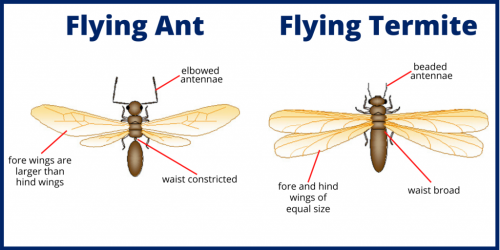
If you only remember three checks, use antennae, waist, and wings. These features separate termites from most look-alike insects.
- Antennae: Termites have straight antennae that look like a string of tiny beads. Flying ants have elbow antennae with a clear bend.
- Waist: Termites have a thick waist and a more uniform body. Ants have a narrow pinched waist that looks segmented.
- Wings: Termite swarmers have two pairs of wings that are similar in length. Flying ants usually have a longer front pair and a shorter back pair.
Wing texture also helps. Termite wings are often more equal and appear delicate. Ant wings may look more varied in size and shape.
Do not rely on color alone. Both termites and ants can appear brown or dark. Structure is the reliable difference.
If you are still unsure, take a clear photo near a coin for size reference. A professional can identify species quickly from these details.
How to Identify Flying Termites Versus Flying Ants
People often search to identify flying termites after seeing winged insects in a room. The confusion is common because flying ants also swarm.
Use a white paper towel and a flashlight. Look at one insect closely if you can do so safely.
- Check the waist. A thick uniform waist points to termites. A narrow pinched waist points to ants.
- Check antennae. Straight bead like antennae suggest termites. Elbow antennae suggest ants.
- Check wings. Termite wings are similar in length. Ant wings usually show a longer front pair.
A practical clue is wings on the floor. Termite swarmers often shed all four wings after landing. Flying ant queens may remove only part of the wings.
If you find equal size wings near window sills, baseboards, or inside light fixtures, treat it as a strong sign and inspect nearby areas for other evidence.
Feature | Flying Termites | Flying Ants |
|---|---|---|
Antennae | Straight, bead like | Bent or elbow shaped |
Waist | Thick and uniform | Narrow and pinched |
Wings | Equal length pairs | Front wings longer |
Wing shedding | Shed all wings after landing | May shed partially |
Body texture | Soft and pale | Hard and shiny |
Common Signs of a Termite Infestation Inside a Home
Swarmers are one sign, but termites can also be present without obvious swarming indoors. Look for evidence on wood, drywall, and foundation edges.
Discarded wings. Small clear wings may collect in window tracks, on sills, near vents, or inside spider webs.
Mud tubes. Subterranean termites often build pencil width tubes along foundation walls, crawl space piers, or utility lines. Tubes help them hold moisture while traveling.
Hollow sounding wood. Tap baseboards, door frames, and trim. Termite damaged wood can sound hollow or feel thin.
Blistering paint. Termite moisture and feeding behind paint can create bubbles that resemble water damage.
Sticking doors and windows. Moisture and structural stress can warp frames and cause sudden sticking.
Frass. Drywood termites can leave tiny pellet droppings that gather in small piles. Many homeowners mistake this for sand or dust at first.
Soft spots. Press lightly on wood trim with a fingertip. If it feels spongy, investigate further.
Unusual smells. Some infestations create a damp, mold-like odor in enclosed areas, especially where moisture issues are present.
For a deeper breakdown of early warning signs beyond swarmers, read our complete pillar guide on spotting termites early and the signs every homeowner should know.
Where Flying Termites Come From: Termite Types and Nesting Habits
Different termite groups behave differently. Knowing the likely group helps you understand risk and prevention steps.
Subterranean termites live in soil and travel to wood through hidden paths. They depend on moisture, which is why damp soil and poor drainage raise risk.
Drywood termites can live inside dry wood without soil contact. They may infest framing, furniture, or trim. Their droppings can appear as frass.
Dampwood termites prefer wood with high moisture. Leaky plumbing, roof issues, or poorly ventilated spaces can create the conditions they like.
Flying termites swarmers may emerge
Because swarmers are reproductive, a swarm near your home means colonies exist in the area. The goal is to keep your structure from becoming an easy target.
What to Do the Day You See Swarmers
Start with documentation. Take clear photos of the insect and any wings. Note the location, the time of day, and the weather conditions.
Do a quick indoor scan. Check window tracks, baseboards, and corners near lights for wing piles and tiny debris.
Do a quick outdoor scan. Look at the foundation line for mud tubes, soil buildup, or areas where mulch touches siding. Capture a sample if safe. A small jar or sealed bag can help confirm identification later.
Avoid random sprays. Many products kill visible insects but do not address a colony. Some can also make it harder to see true activity patterns.
If you see repeated swarms indoors, or you find tubes, frass, or damaged wood, schedule a professional inspection soon.
How Termites Get Inside: Common Entry Points
Termites do not need a large opening. They exploit small gaps and hidden routes, especially where wood and moisture meet.
Wood contact with soil is one of the biggest risk factors. Porch posts, deck supports, door frames, and siding that touch soil can create a direct bridge.
Cracks in foundations, expansion areas, and utility penetrations can allow termites to reach hidden wood. Termites can travel behind walls without being seen.
Moisture sources act like beacons. Leaky pipes, dripping outdoor faucets, and air conditioner condensation can keep wood damp and attractive.
Mulch and dense vegetation near the foundation can hide activity. They retain moisture and reduce your ability to notice tubes early.
Firewood stacks, lumber piles, and cardboard storage can also attract termites. Cellulose is their food source, whether it is structural wood or stored debris.
How to Prevent Termite Infestations: Practical Home Steps
Prevention is about reducing the conditions termites need. Termites want cellulose, moisture, and hidden access.
- Create a clear inspection gap: Keep soil and mulch lower than siding. Keep the foundation line visible so tubes and damage are easier to spot.
- Control moisture fast: Repair plumbing leaks, roof leaks, and condensation issues. Make sure gutters and downspouts move water away from the foundation.
- Improve drainage: Standing water near the home keeps soil damp. Grade soil so water flows away from the structure when possible.
- Ventilate enclosed spaces: Crawl spaces and basements benefit from airflow and humidity control. Consider a dehumidifier if the area stays damp.
- Keep wood away from soil: Store lumber, cardboard, and firewood away from exterior walls. Use a rack or barrier to keep wood off damp ground.
- Be cautious with mulch: Mulch retains moisture. Keep it from touching wood, and keep it shallow near the foundation line.
- Seal and maintain: Caulk gaps around windows and utility penetrations. Replace worn weather stripping. Repair cracks that allow hidden paths.
- Choose resistant materials where possible: Pressure treated wood and borate treated products can reduce risk, but they are not a complete shield if conditions are favorable for termites.
- Schedule routine inspections: Many homeowners choose annual checks. Early detection can prevent costly structural repairs.
For consumer guidance, review the United States Environmental Protection Agency page on termites and prevention.
Maximizing Your Prevention Investment
Termite prevention is an investment in your structure. The goal is fewer risk factors, fewer surprises, and lower long term repair costs.
The best results come from combining home maintenance with professional monitoring. Each step reduces the chance termites can establish a feeding path.
If you already had termites in the past, prevention becomes even more important. Colonies can persist in the surrounding environment for years.
A prevention plan should focus on the home, not just the insects. Moisture control, access reduction, and routine inspection provide the strongest foundation.
Best Practices for Long Lasting Results
Invest in quality preparation. Preparation means fixing moisture sources, improving drainage, clearing wood debris, and keeping the foundation line visible.
Preparation can double the value of a professional treatment because it removes the conditions termites rely on for survival.
Choose appropriate protection methods. Baits can reduce colony pressure over time. Soil treatments can create a protective zone. The best choice depends on the structure and the risk areas.
Match product choices to exposure. Bathrooms, kitchens, and crawl spaces need stronger moisture control because damp conditions raise risk.
Plan for regular maintenance. A quick seasonal check helps. Look for new leaks, clogged downspouts, mulch buildup, and wood contact points that changed over time.
Consider climate factors. Humid regions keep wood moisture higher. Moisture resistant strategies, including ventilation and dehumidification, support long lasting results.
When to Schedule Your Project
Timing affects prevention and treatment. Many homeowners call after a swarm, but you can schedule an inspection at any time.
Interior termite inspections are available year round. Cooler months may offer more flexible appointment times.
Exterior maintenance work is easiest during mild seasons. Tasks like trimming vegetation, adjusting drainage, and sealing gaps are often more comfortable then.
Avoid peak heat months for heavy outdoor repair work when possible. Extreme heat can slow the pace of exterior tasks and affect comfort.
If you see swarmers indoors, wing piles in multiple areas, or visible mud tubes, schedule promptly. Waiting for an ideal season can allow damage to progress.
What a Professional Termite Inspection Usually Covers
A professional inspection looks beyond visible insects. It focuses on evidence, risk factors, and entry routes.
Inspectors typically check the foundation line, crawl space or basement, garage edges, and wood points close to soil.
They check interior trim, windows, and doors for soft spots, hollow sounds, and paint irregularities that resemble moisture damage.
They also evaluate moisture sources. Leaks, condensation, and drainage problems often explain why termites are present.
Progressive Pest Control can confirm whether you are seeing termite swarmers or flying ants, then outline practical next steps based on what is found.
A strong report should describe evidence, list risk factors, and explain treatment options in plain language. It should also include prevention steps you can keep doing after service.
For practical prevention tips on wood and soil separation and crawl space cleanup, see a state agriculture consumer information resource.
Call Progressive Pest Control at (770) 791-0055 for a quick relief or get rid of termites fast.
Conclusion
To identify flying termites, focus on straight antennae, a thick waist, and wings that match in length. Then confirm with supporting clues like wing piles, mud tubes, and hollow sounding wood.
Prevention works best when it is routine. Reduce moisture, keep wood away from soil, maintain a visible foundation line, and store cellulose materials away from exterior walls.
If you want certainty, schedule an inspection. Early confirmation can prevent costly structural repairs and keep a small issue from turning into a major one.
To identify termites, see our pillar article, “Spotting Termites Early: Signs Every Homeowner Should Know.” Read our complete guide to identify flying termites and prevent infestations.
Contact Progressive Pest Control or call at (770) 791-0055 for a termite inspection and a prevention plan tailored to your home.
FAQs
Termite swarmers shed their wings after landing. Wing piles near windows can indicate a colony nearby, even if you do not see insects again.