

Termites or Ants? Learn How Color Can Help You Tell Them Apart
Ants
Seeing small winged insects near a window or light can be unsettling. Many homeowners assume they are termites. Others assume they are flying ants. The truth is that both can show up in similar places, especially during swarming season, and they can look confusing at first glance.
Color can help you make a faster first guess. But color alone is not enough to confirm what you are seeing. The safest approach is to use color as a starting clue, then confirm with a few physical traits that are far more reliable.
This guide is written to help homeowners learn how to identify termites with practical visuals and simple checks. It also explains why the termite versus ant difference matters, because the next step is very different depending on what you find.
Why color is a helpful clue but not the final answer
Color is the first thing most people notice. That is normal. Many termite swarmers are described as black, dark brown, tan, or light brown depending on species and region. Ant swarmers can be black, brown, or reddish, and carpenter ant swarmers often show a reddish tint.
The problem is overlap. Some termites are darker. Some ants are darker. Lighting also changes how wings look, especially when wings are clear or smoky. That is why University of Maryland Extension consistently recommend checking structure, not just color.
So think of color as a quick filter. Then confirm with the three most reliable identifiers.
Quick color guide termites versus ants
Typical termite colors you may see
Many common termite swarmers range from dark brown to black, and some species can be tan to light brown.
Wings on termite swarmers are often described as clear, pale, milky, or smoky. They can look almost transparent under indoor lighting.
Typical ant colors you may see
Flying ants and carpenter ant swarmers are commonly black or brown and may also show reddish tones.
Ant swarmer wings are often described as brown tinted rather than clear. This is not always visible unless you look closely, but it is a helpful clue when combined with wing size differences.
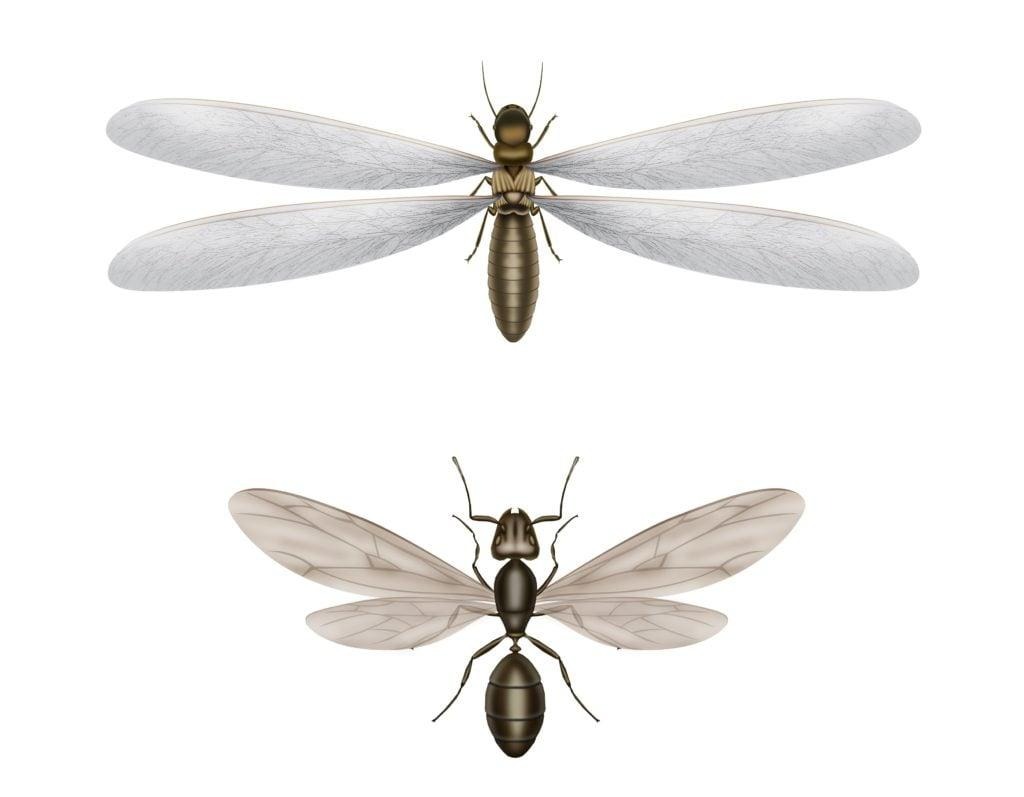
The key takeaway about color
If you see tan to light brown winged insects, termites move higher on the suspect list. If you see a reddish tint, flying ants move higher on the suspect list. But do not stop there. Confirm with wings, antennae, and waist shape before you decide what to do next.
How to identify termites using the three strongest physical markers
If you only remember one thing from this article, remember this. Wings, antennae, and waist shape are more dependable than color. Multiple reputable sources repeat these same identifiers because they work.
Wings shape and length
Termite swarmers have two pairs of wings that are about the same length. Their wings are typically equal sized and can extend beyond the body.
Flying ants have two pairs of wings too, but the front wings are longer than the back wings. This unequal wing length is one of the fastest ways to separate ants from termites when you have a clear view.
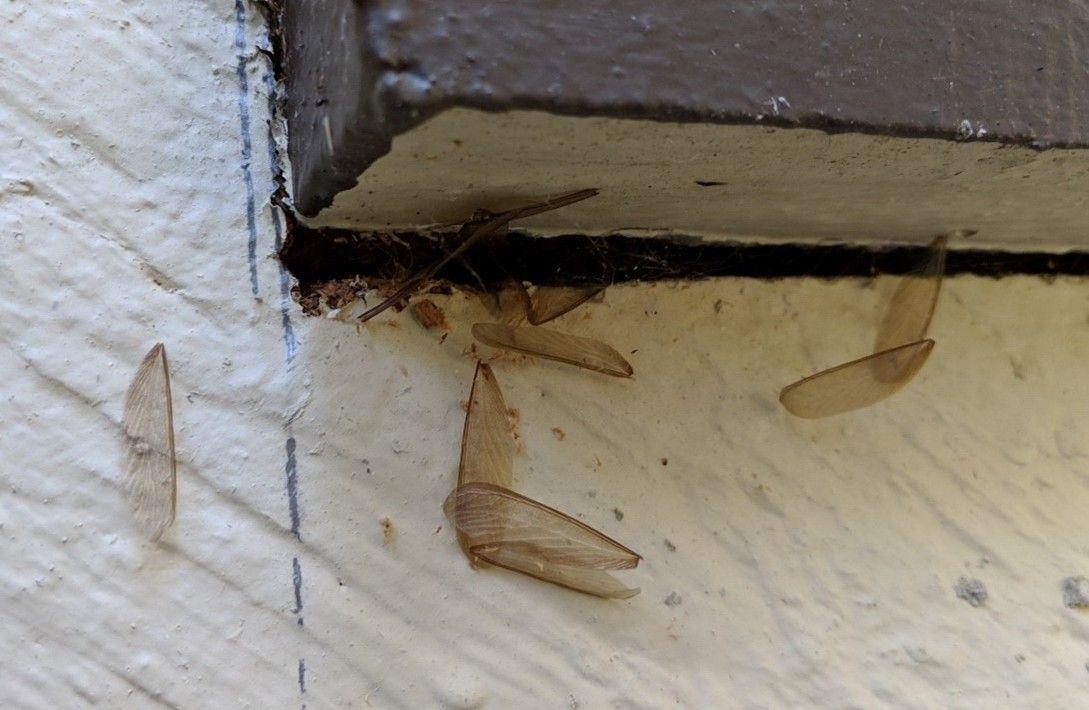
There is another wing clue that matters. Termite wings break off easily. Homeowners often notice small piles of discarded wings near windows, doors, or light sources after a swarm.
If you find wings but no insects, check the wing sizes. If they all look similar in size and shape, termite is more likely. If you see two clearly larger wings mixed with two smaller wings, flying ant is more likely.
Antennae shape
Termites have straight antennae that are often described as beaded. They look like a gentle string of beads and do not form an elbow angle.
Ants have elbowed antennae. That bend is usually noticeable even without magnification if you get a clear close view.
Waist and body shape
Termites have a thick waist. DoMyOwn.com describes them as having a straight or uniform waist, meaning the body does not pinch in like an ant.
Flying ants have a pinched waist. Their body looks segmented with a clear narrowing between thorax and abdomen.
When you combine these three markers, identification becomes much easier. Even if color is unclear, wings, antennae, and waist shape will usually give you the answer.
Termites versus ants color identify checklist you can use in one minute
Use this short checklist when you find swarmers.
• Body color looks tan or light brown, or dark brown to black: Then termite is possible.
• Body color looks black or brown with a reddish tint: Then flying ant is possible.
• Wings are equal length: That strongly supports termite.
• Front wings clearly longer than back wings: That strongly supports flying ant.
• Antennae look straight: That supports termite.
• Antennae look elbowed: That supports flying ant.
• Waist looks thick and uniform: That supports termite.
• Waist looks pinched: That supports flying ant.
If three or more markers point to termites, treat it as urgent and move to the next section.
Feature | Termites | Ants |
|---|---|---|
Primary Color | Usually dark brown, black, or sometimes tan to light brown depending on species | Typically black, brown, or reddish in color |
Wings | Two pairs of wings that are equal in length | Front wings are longer than back wings |
Wing Behavior | Wings break off easily and are often found discarded near windows or doors | Wings usually stay attached after swarming |
Antennae Shape | Straight antennae with a beaded appearance | Elbowed or bent antennae |
Waist Shape | Thick and straight waist with no visible pinch | Narrow, pinched waist between body segments |
Body Shape | Uniform, straight body profile | Segmented body with clear separation |
Swarming Season | Often during warm, humid conditions and after rainfall | Can swarm at various times depending on species |
Relation to Wood | Feed on wood and cellulose materials | Do not eat wood but may nest in damp or damaged wood |
Risk to Home | Can cause serious structural damage if left untreated | Usually nuisance pests unless carpenter ants are involved |
Identification Reliability | Wings, waist shape, and antennae are strongest indicators | Wing size difference and elbowed antennae are key signs |
Use color only as a starting point. Final identification should always be confirmed using wing length, antennae shape, and waist structure. When three or more traits align with termites, professional inspection is strongly recommended.
Why correct identification matters for your home
Flying ants can be a nuisance. Carpenter ants can cause issues by excavating wood for nesting, especially in moisture damaged areas, but they do not eat wood the way termites do.
Termites feed on wood and cellulose materials. They can remain hidden while causing structural damage. Many homeowners first notice them only when swarmers appear or when damage becomes visible.
That is why experts emphasize fast action when termites are suspected. A delay can allow a colony to keep feeding while you focus on surface level fixes.
Many termite infestations go unnoticed for months, which is why homeowners should familiarize themselves with the early warning signs before significant structural damage occurs. Read our guide on spotting termites early to learn what to look for.
Common situations where homeowners confuse termites and ants
Swarmers near windows
Both termites and flying ants are attracted to light. Swarmers often appear near windowsills, sliding doors, and lamps.
Termites are more likely to leave piles of wings behind because their wings break off easily.
Sudden appearance after rain or humidity
Many termite swarms occur when conditions favor dispersal, often after rain or when humidity rises. That timing can overlap with ant swarming. So timing alone does not confirm either one.
Bugs found around wood
Seeing insects near wood makes homeowners think of termites. But carpenter ants can also be found near wood because they may nest in damp or damaged areas. The difference is that ants excavate wood, while termites consume wood.
Color focused scenarios and what they likely mean
Scenario 1 black or dark brown body with clear wings
This combination is commonly used to describe termite swarmers. But it can also describe some ants. Confirm with wing size and antennae shape.
Scenario 2 black body with reddish tint
That reddish tint often points toward carpenter ant swarmers. Still, confirm with the pinched waist and unequal wings.
Scenario 3 tan to light brown swarmers
Some termite species are described as tan to light brown. If you see this coloring and the wings are equal length, treat it as a strong termite signal.
If you think you have termites what to do next
If your checklist points to termites, focus on verification and containment, not DIY spraying. Many experts recommend professional evaluation for termite activity because treatment requires proper placement and long term strategy such as baiting systems or liquid treatments.
Here are practical steps you can take immediately:
• Save a specimen: Place one insect and any wings you find into a clear bag or container. This helps confirm identification quickly.
• Take photos: A close photo of wings and antennae is often enough for a first assessment.
• Look for supporting signs: Mud tubes on foundation surfaces, soft sounding wood, or visible damage can support termite suspicion.
• Avoid disturbing suspected areas: Breaking tubes or opening wood can scatter activity and make patterns harder to read during inspection.
At this stage, a professional inspection is the best next move. Progressive Pest Control can confirm what you are seeing and recommend the right response based on the type of termite activity and risk level.
If you think you have flying ants what to do next
If your checklist points to flying ants, you still want to pay attention, especially if you see a consistent trail or repeated swarms indoors. Carpenter ants can indicate moisture issues and may build satellite nests.
Start with these steps:
• Identify moisture sources: Leaky plumbing, damp wood, and poor ventilation support nesting.
• Observe recurring activity: A single swarming event can happen without a major indoor nest. Repeated activity suggests more investigation.
• Do not assume all ants are harmless: Some ant infestations are manageable with sanitation and exclusion, but carpenter ant activity in wood deserves a closer look.
If you are uncertain, treat it like a verification problem. It is better to confirm quickly than to guess.
If you need help, Progressive Pest Control provides contact options and scheduling information. Call Progressive Pest Control at (770) 791-0055 for a quick relief or get rid of bed bugs fast.
Conclusion
Color can help you make a fast initial guess between termites vs ants.Termites are often described as dark brown to black or sometimes tan to light brown. Flying ants can be black, brown, or reddish.
But the safest way to learn how to identify termites is to confirm using structure. Check wing length, antennae shape, and waist thickness. Those markers are the most consistent across reputable identification guides.
If you suspect termites, do not wait for damage to become obvious. Swarmers can be an early warning sign, and professional confirmation is the fastest path to clarity.
To identify termites, see our pillar article, “Spotting Termites Early: Signs Every Homeowner Should Know.” Read our complete guide to identify flying termites and prevent infestations.
If you are unsure whether you are seeing termites or flying ants, contact Progressive Pest Control today at (770) 791-0055 for a professional identification and inspection so you can act before hidden damage grows.
FAQs
Look at the wings. Termite wings are equal in length. Ant wings have larger front wings and smaller back wings.