


Ants
If you have spotted small insects near windows, baseboards, or wood trim, you are not alone. Many homeowners notice a few winged bugs during warmer months and assume they are ants. Others see tiny workers near damp wood and assume termites. The problem is simple. Ants and termites can look similar at a quick glance, especially when wings are involved. That confusion can get expensive.
Termites can cause serious structural damage because they feed on cellulose found in wood and other building materials. Ants, in most cases, are more of a nuisance. The major exception is carpenter ants, which can hollow out wood to build nesting galleries, especially where wood is already damp or decayed.
This guide focuses on two things you asked for when identifying termites vs ants.
Progressive Pest Control supports homeowners with inspection based identification and treatment planning, but this article is designed to be useful even before you pick up the phone.
Quick answer first: the fastest way to tell termites from ants
If you only remember one section, remember this.
Look at three features: waist, antennae, and wings.
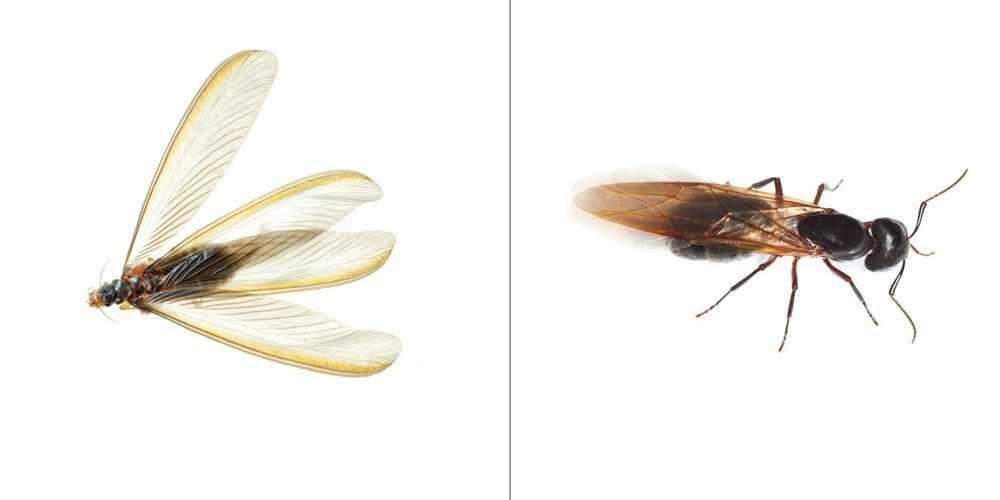
Termites typically have a broad waist, straight beaded antennae, and wings that are equal length when present. Ants typically have a pinched waist, elbowed antennae, and front wings that are longer than the back wings when present.
Now let us break this down in a way you can actually use.
Why the difference matters
A termite colony can live hidden behind walls, under floors, or below ground for years. By the time visible signs appear, damage can already be extensive.
Ants are usually easier to spot because many species travel openly along trails. Carpenter ants may still hide their nesting sites, but they often leave evidence such as wood shavings or frass near kick out holes.
Correct identification helps you choose the correct next step. Termites are not handled the same way as ants. Control methods and inspection targets differ.
How to identify termites by appearance
Body shape and waist
Termites have a more uniform body width. Their waist does not narrow sharply. Many descriptions call it broad or thick, with a more rectangular look.
Ants have a distinct waist. You can often see a narrow pinch between body sections. This is one of the easiest visual cues when the insect is large enough to inspect.
Antennae shape
Termite antennae are generally straight and can look beaded. They may droop slightly, but they do not bend sharply like an elbow.
Ant antennae are typically elbowed, with a noticeable bend.
Wings and swarmers
Winged termites and winged ants are the most commonly confused forms. These winged reproductive insects appear during swarming periods and are often found near windows, light fixtures, and doors.
Termite swarmers typically have two pairs of wings that are equal length. The wings often extend beyond the body. Termites may also shed their wings, so piles of discarded wings can be a strong clue.
Winged ants have front wings that are larger than back wings. Their wings may look more tinted compared with termite wings, depending on the species.
If you see a pile of shed wings near a window sill or entry point, treat it as a serious warning sign and consider an inspection.
Color differences and why they are not enough
Color is not a reliable indicator on its own.
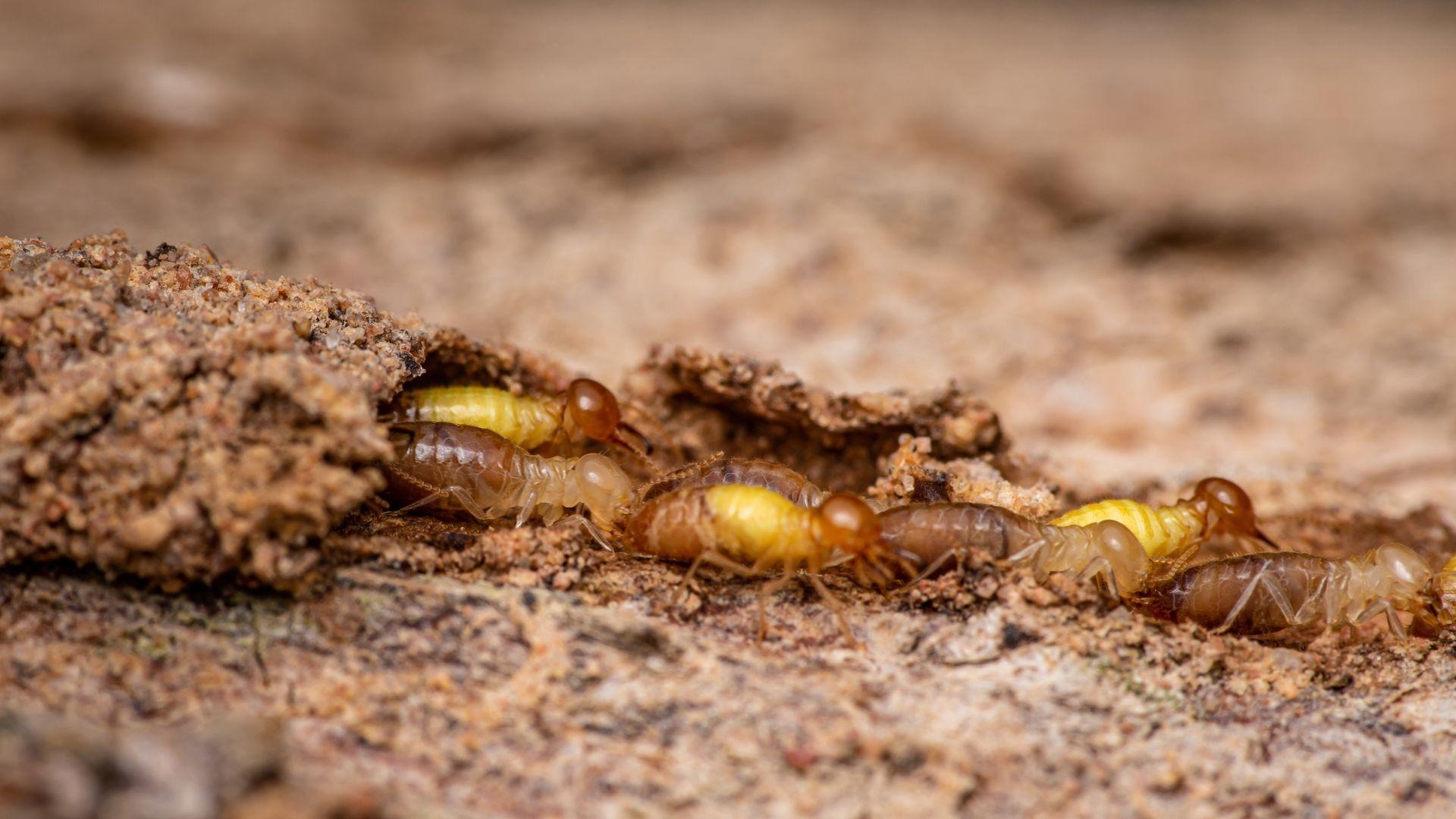
Termite workers are often pale or creamy in color and may not be seen unless you break into an infested area. Swarmers can appear darker. Ants can be black, brown, or reddish depending on the species.
Because color varies, it should be used only as a supporting clue.
Identifying termites vs ants by behavior
Where you see them
Termites often avoid open air because they need moisture and protection. Subterranean termites build shelter tubes to move between soil and wood while staying covered.
Ants often travel in the open, forming visible trails along walls, counters, and edges. Carpenter ants may still be seen moving in and out of a nest site, especially at night, depending on the species and conditions.
What they eat and how they affect wood
This is one of the clearest differences.
Termites eat wood and other cellulose materials. They can consume wood from the inside and leave behind hollowed galleries. Damage can be hard to spot until it becomes severe.
Carpenter ants do not eat wood. They excavate it to create nesting galleries. This often produces sawdust like frass that may contain wood fragments and insect parts.
That difference matters. A termite problem is typically a feeding problem. A carpenter ant problem is often a nesting problem, frequently linked to moisture damaged wood.
Termites vs Ants: Key Differences You Need to Know
To make identification easier, the table below summarizes the most important differences between termites and ants.
Feature | Termites | Ants |
Waist Shape | Broad and straight waist | Narrow, pinched waist |
Antennae | Straight, beaded antennae | Elbowed or bent antennae |
Wings (if present) | All wings equal length | Front wings longer than back wings |
Body Color | Pale, creamy, or light brown | Black, brown, or reddish |
Wood Interaction | Eat wood for nutrition | Do not eat wood, excavate for nesting |
Damage Type | Structural damage from inside out | Hollowed galleries in damp wood |
Mud Tubes | Common in subterranean species | Not present |
Frass or Debris | Pellet like droppings in some species | Sawdust like wood shavings |
Visibility | Often hidden behind walls or soil | Frequently seen moving in open trails |
Risk Level | High, can cause major structural damage | Low to moderate depending on species |
Signs in your home that point to termites
The most helpful way to identify termites is to combine appearance clues with evidence of activity.
Mud tubes on foundations or walls
Subterranean termites build mud tubes to maintain moisture and protection while traveling. These can appear on foundation walls, crawl spaces, and other surfaces that connect soil to wood.
Mud tubes are one of the most recognizable termite signs. If you break a tube and see activity inside later, it may indicate an active infestation.
Discarded wings near entry points
Termite swarmers often shed their wings after finding a place to start a new colony. Wings can collect near window sills, door frames, and other light sources.
Wing piles are not proof of a colony inside your home, but they are a strong indicator that termites are close enough to take seriously.
Hollow sounding wood and surface blistering
Tapping wood and hearing a hollow sound can indicate internal damage. These signs can be subtle. They are easy to miss during normal cleaning and day to day living.
Frass and termite droppings
Some termites produce droppings that can be found near damaged wood. The word frass is often used in pest content, but it can also show up with carpenter ants, so it should be interpreted carefully.
If you see pellet like material or dust near wood features, it may warrant closer inspection to identify the source.
Signs that point to ants or carpenter ants
Visible trails and high activity in open spaces
Ants commonly form trails to food sources. Kitchens, pantry areas, pet bowls, and trash zones are common hotspots.
Termites are less likely to travel openly unless their shelter is disturbed.
Wood shavings and kick out holes
Carpenter ants excavate wood and push out debris, creating sawdust like piles near baseboards, window trim, or structural wood. They may also create small kick out holes where debris exits the gallery.
Termite galleries are often described as rougher, with soil or mud present. Carpenter ant galleries are often smoother.
Moisture connection
Carpenter ants are strongly associated with damp or damaged wood. They often nest in areas with leaks, poor ventilation, or condensation issues.
Termites also need moisture, but the location pattern differs. Subterranean termites commonly connect soil to wood via tubes, while carpenter ants may nest inside wood above ground where moisture has already weakened the material.
A simple comparison checklist you can use at home
Use this quick checklist for identifying termites vs ants.
Look at the insect:
• Broad waist, no pinch suggests termite
• Pinched waist suggests ant
• Straight beaded antennae suggests termite
• Elbowed antennae suggests ant
• Equal length wings suggests termite
• Front wings longer suggests ant
Look for evidence:
• Mud tubes suggest subterranean termite activity
• Shed wings near windows suggest termite swarming nearby
• Smooth galleries and sawdust piles suggest carpenter ants
• Hollow sounding wood and bubbling paint can suggest termite damage
What to do if you are still unsure
It is normal to feel uncertain. Many homeowners do not have magnification tools or the ability to inspect hidden areas safely.
If you suspect termites, treat it as time sensitive. A professional inspection can confirm species, locate activity zones, and identify risk factors such as moisture or wood soil contact.
If you suspect ants, you can still benefit from identification. Some ant problems are seasonal and minor. Others involve carpenter ants that may signal moisture issues that also affect your home.
Prevention: reducing the conditions that attract termites and ants
Moisture control is a foundation step
Many sources highlight moisture as a key driver for termite survival and risk. Fixing leaks, improving drainage, and keeping gutters functioning reduces attractive conditions.
For ants, moisture can also attract them, especially when it supports other insects or food sources, or when it creates damp wood for carpenter ants.
Reduce wood contact with soil
Wood to soil contact increases risk for subterranean termites. Keeping wood features off the soil and maintaining a barrier between soil and structural wood is a common prevention concept.
Store firewood correctly
Avoid stacking firewood against the home. This can trap moisture and provide an easy bridge for termites. Store wood off the ground and away from structures.
Schedule routine inspections
Because termites can be hidden, periodic inspections can catch activity earlier. EPA guidance emphasizes consumer focused identification and prevention awareness, including inspection and risk reduction steps.
Common myths that cause homeowners to miss termites
Myth one: If I see ants, it cannot be termites
It can be both. Homes can have ant activity and termite risk at the same time. The pests respond to different conditions and food sources.
Myth two: Termites are only a problem in old homes
New construction can be at risk too. Termites focus on cellulose and access routes, not the age of the structure. Prevention and inspection still matter.
Myth three: I will always see termites if they are present
Many termites stay hidden. You may only notice secondary signs such as wings, tubes, or subtle wood damage.
Catching termite problems early can save you from costly damage—learn how to identify the warning signs before it’s too late in our detailed guide.
How Progressive Pest Control approaches identification
This is where professional support becomes practical rather than promotional.
Progressive Pest Control focuses on confirmation first. Identification includes visual checks of common termite indicators such as mud tubes, moisture zones, and wood contact points. It also includes distinguishing ant activity patterns and carpenter ant evidence such as kick out debris and smooth galleries.
If termites are confirmed, the next step is planning based on the type of termite and the structure’s risk profile. EPA consumer guidance stresses using appropriate termite treatments and prevention measures based on accurate identification.
If you need help, Progressive Pest Control provides contact options and scheduling information. Call Progressive Pest Control at (770) 791-0055 for a quick relief or get rid of bed bugs fast.
Conclusion
Termites and ants may look alike at first glance, but their body structure, wings, antennae, and damage patterns tell a clear story when you know what to look for. Broad waist, straight antennae, and equal wings point toward termites. Pinched waist, elbowed antennae, and uneven wings point toward ants.
If you suspect termites, act quickly. Look for mud tubes, discarded wings, and hollow sounding wood. Confirming the pest early can protect your home from extensive repairs.
If you think you are seeing termite signs, contact or call Progressive Pest Control today at (770) 791-0055 to schedule an inspection and get clear answers fast.
FAQs
Mud tubes and discarded wings are common strong indicators, especially when found near foundations, crawl spaces, windows, or entry points.